Free vs Paid Accent Courses: Which Is Worth It?
If you are comparing a free accent correction course with a paid accent training course, you are asking the right question. Most learners do not actually need “more content.” They need the right mix of structure, feedback, repetition, and realistic expectations. That is why the better question is not whether free or paid is universally better, but which option is worth it for your current goal, whether that is an accent neutralization course for workplace clarity, an accent reduction online course for self-study, or a focused American accent course or British accent course for a specific target voice.
A useful place to begin is the broader Accent Help accent directory, which shows how many regional models and speech patterns are available for comparison, from British and American varieties to city-specific accents and international Englishes. That matters because many learners shop for accent training courses before they have even chosen the accent they want to learn. A course can only be worth the money if the target itself is clear.
What Counts as a Free Accent Course?
A free accent course usually means one of four things: a blog series, a set of practice tools, a YouTube-style lesson path, or a resource hub built around self-study. These materials can be surprisingly effective when they are specific and well-structured. For example, the Accent Help blog already offers practical guidance on areas that many paid programs also cover, including target accent choice, pronunciation habits, rhythm training, and self-awareness. A learner who works consistently through free resources can absolutely make progress, especially in the early stage.
Some of the most useful free starting points are not full “courses” in the commercial sense but articles and tools that help you choose direction. If you are unsure whether you need formal training at all, reading 10 Signs You Need Accent Training can help you decide whether you are dealing with a real clarity issue or simply normal variation in speech. If you are still asking what your current speech pattern sounds like, the guide What Is My Accent? is another strong free entry point before spending money on a diagnosis or consultation.
What You Usually Get in a Paid Accent Course
A paid accent reduction course or accent neutralization course usually adds three things that free resources rarely provide in a strong, consistent way: sequence, accountability, and feedback. Instead of asking you to assemble your own study plan from scattered videos and articles, a paid product generally organizes the material into a progression. That can be valuable because accent change depends on ordered repetition. You do not want to train advanced intonation patterns before you have stabilized the core vowels and consonants that shape the accent in the first place.
The second advantage is accountability. Learners often stay excited about a free accent training course for a week and then stop. Paying for a program, especially one with assignments or live feedback, tends to increase follow-through. The third advantage is correction. That matters because many people cannot reliably hear their own vowel shifts, rhythm habits, or misplaced stress until someone points them out. In that situation, paid accent reduction courses can save time because they reduce wasted practice. This is one reason Accent Help’s resource ecosystem places so much value on comparison and self-observation, whether through the accent generator library or the blog’s training articles.
When a Free Accent Correction Course Is Enough
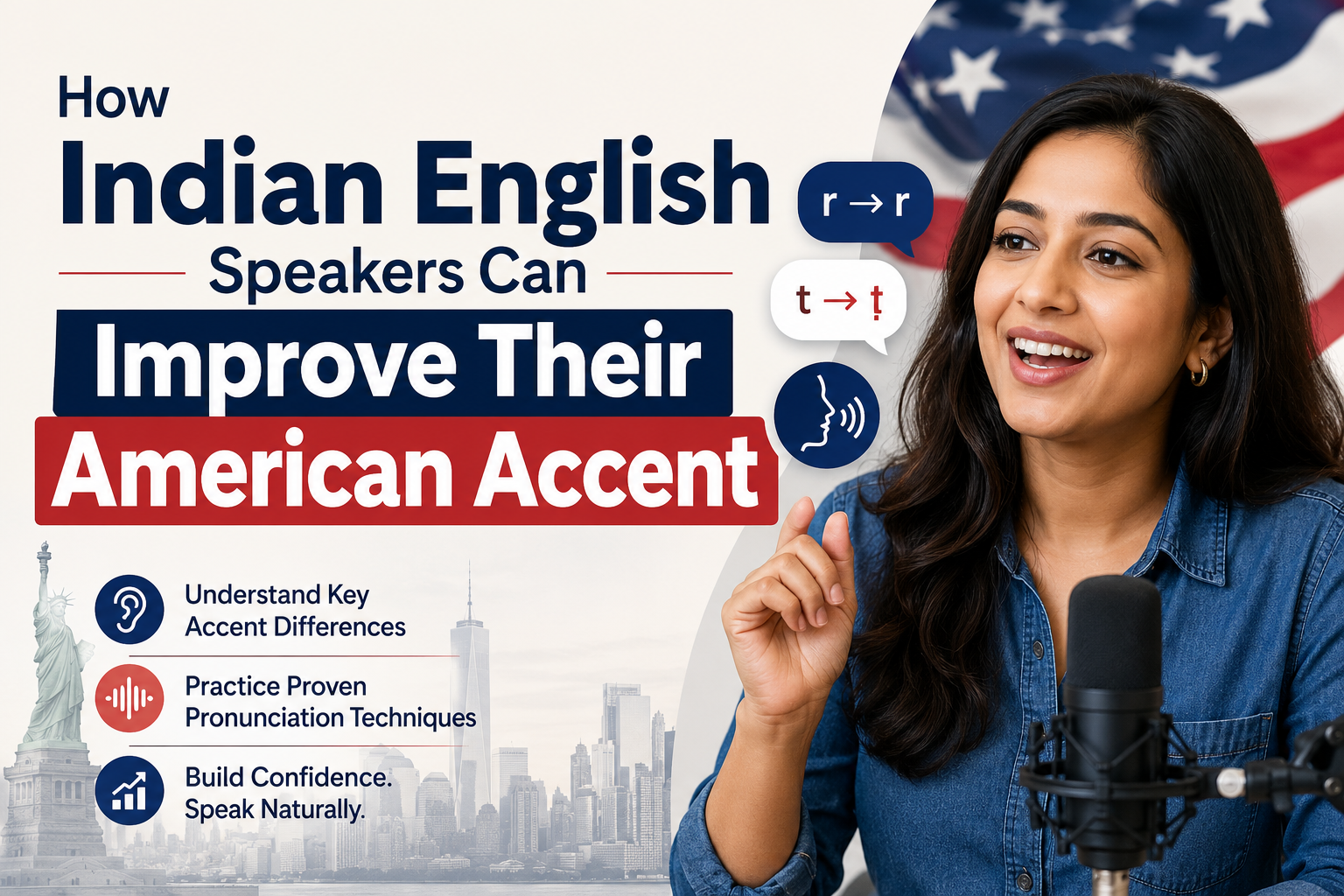
A free accent correction course can be enough when your goal is modest and specific. If you want to sound a little clearer in meetings, understand what a neutral American accent actually is, or compare a few target accents before committing, free resources may do most of the work. For instance, if your actual aim is a neutral American voice, the article Neutral American Accent Guide gives a clearer foundation than many paid programs that begin selling before they define the target properly.
Likewise, if you are still deciding between an American accent course and a British accent course, it makes much more sense to use free comparison material first. The Accent Help article American vs British Accent: 10 Key Differences is the kind of free resource that can prevent an expensive mismatch later. Many people buy a course before realizing they do not even prefer that accent once they hear it clearly in context.
Free is often enough if: you are self-motivated, your goal is narrow, you can practice consistently, and you do not need someone to diagnose mistakes you cannot hear on your own.
When Paid Accent Training Courses Are Worth It
Paid accent training courses become much more worth it when clarity has professional consequences. If you repeat yourself constantly, prepare for auditions, teach or present in high-stakes settings, or need a reliable system to move from one target accent to another, then a casual free path may simply be too slow. In those cases, the price of a paid accent reduction online course is often less important than the cost of delayed progress. If the wrong pronunciation habits stay uncorrected for months, the learner loses time, confidence, and momentum.
This is especially true for learners chasing high-demand targets like an american english accent course or british accent course. Those phrases are searched heavily because people often want a polished, widely intelligible speech model for work, acting, content creation, or study. But a target like General American or standard southern British speech is not just a list of sounds. It is a coordinated set of vowel choices, rhythm, stress patterns, and reduction habits. Structured training can make that system much easier to absorb than self-directed practice alone. A helpful free pre-step is to read The Easiest Accent to Learn, which frames why General American is often the most practical target for learners who want a clear and flexible model.
Free vs Paid by Goal Type
For Accent Reduction
If your goal is simply to reduce the strongest features of your current accent and become easier to understand, a free accent reduction course can be enough in the beginning. But if the goal is faster, more measurable change, paid accent reduction courses usually win because they are better at prioritizing which sounds and habits matter most. Without that prioritization, learners tend to waste time on low-impact details.
For Accent Neutralization
An accent neutralization course is often harder to self-manage because “neutral” is a vague concept. Learners need a specific target, and many free materials do not define one well. This is an area where paid guidance can be useful, though free foundational reading still helps. For example, the neutral American speech guide offers a clearer free framework than many generic paid ads that promise neutrality without explaining what the learner is actually aiming at.
For Accent Training and Performance
If you need accent training courses for acting, roleplay, character writing, or performance work, free tools are useful but often incomplete. In that space, the real value of a paid option is expert correction and role-specific specificity. Still, free comparison tools from the Accent Help accent collection are excellent for early exploration, especially when you want to compare regional American and British targets before committing.
What Most People Get Wrong About “Free”
Free does not automatically mean low quality. Some of the best early-stage learning happens through blog posts, comparison tools, and practice methods that cost nothing. Accent Help’s own blog shows this well. Articles like Shadowing Technique: The Fastest Way to Improve English Pronunciation teach a practical method many learners can use immediately without buying anything.
The real downside of free is not quality by itself. It is fragmentation. You may find one excellent article about rhythm, one useful page about target selection, and one good listening tool, but still have no complete plan. That is often the moment when paid becomes worth it: not because the content is magically better, but because the sequence is clearer and the learner has stopped spinning in place.
A Practical Decision Framework
Before paying for any accent correction course, ask yourself four questions. First, do I know my target accent clearly? Second, can I practice consistently without external accountability? Third, can I hear my own mistakes well enough to self-correct? Fourth, is speed important enough that delay will cost me more than the course fee?
- Choose free if you need exploration, comparison, and a low-risk starting point.
- Choose paid if you need feedback, faster progress, accountability, or a structured path.
- Choose both if you want the smartest approach: use free tools to define the target, then pay only when you know exactly what kind of help you need.
In practice, the best path for many learners is hybrid. Start with the free material in the Accent Help blog library, compare targets in the accent generator directory, and only then decide whether a paid accent neutralization course or accent reduction online course is worth the investment.
Final Verdict: Which Is Worth It?
If you are early in the process, free resources are usually worth it first. They help you identify whether you need an accent correction course at all, whether your real target is an american accent course, an american english accent course, or a british accent course, and whether self-study methods like shadowing already solve a large part of the problem. For this stage, the combination of the Accent Help blog and the accent comparison directory is often enough to make a much smarter next decision.
If you are stuck, need fast results, cannot hear your own mistakes clearly, or need a structured outcome for work or performance, then paid accent training courses are usually worth the money. The key is to use free tools first so that when you do pay, you are paying for correction and structure rather than for information you could have found on your own.