The Yinzer Accent Guide: Why Pittsburgh Speech Stands Out
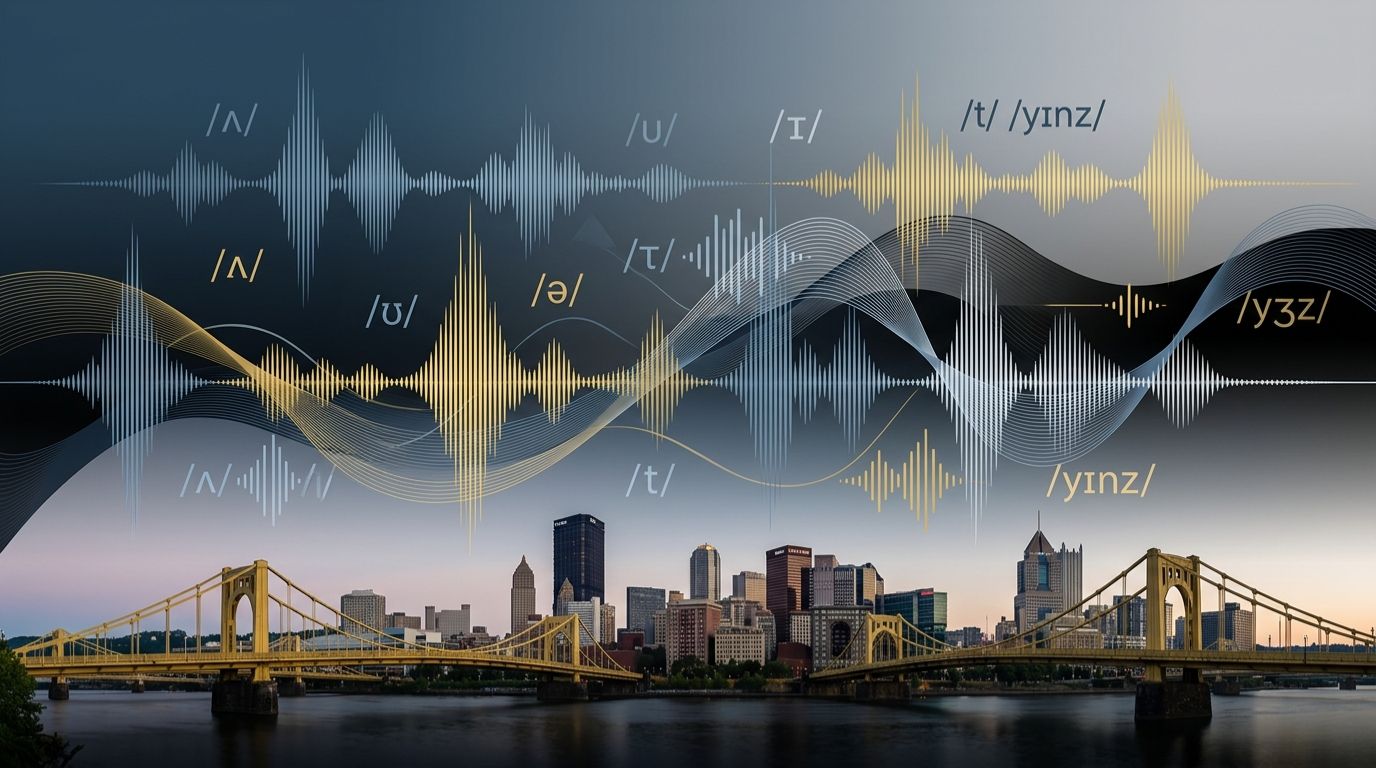
The Yinzer accent is one of the most recognizable regional speech patterns in the United States, and it is closely tied to Pittsburgh identity. Linguistically, it is usually discussed as part of Western Pennsylvania English, also known as Pittsburghese, a dialect centered in Pittsburgh and the surrounding region. As both the Duquesne University Pittsburghese guide and the Wikipedia overview of Western Pennsylvania English explain, the term “Yinzer” is commonly associated with speakers whose pronunciation and vocabulary strongly reflect this local variety.
For readers exploring regional American speech more broadly, the Accent Help directory of accent resources is a useful starting point because it places Pittsburgh-area speech in a larger landscape of American and international varieties. While there is not currently a dedicated Yinzer tool in that directory, comparing nearby and related speech models such as the Philadelphia accent generator, the New York accent generator, and the General American accent generator can help learners hear what makes Pittsburgh speech feel so distinct.
What Is the Yinzer Accent?
In everyday conversation, “Yinzer accent” usually refers to a strongly local Pittsburgh way of speaking, especially one marked by recognizable pronunciation, neighborhood identity, and traditional regional vocabulary. In more formal linguistic terms, it belongs to Western Pennsylvania English, a dialect that extends beyond the city itself but is most strongly associated with Pittsburgh and working-class local speech. The Duquesne guide notes that the strongest forms of the accent are historically linked with the city’s working-class population, which helps explain why the label carries both linguistic and cultural meaning at the same time.
Short version: a Yinzer accent is not just “an American accent from Pittsburgh.” It is a regional speech identity with its own sound patterns, local expressions, and social associations.
Why Is It Called “Yinzer”?
The name comes from the local second-person plural pronoun “yinz,” one of the best-known features of Pittsburgh speech. According to the Western Pennsylvania English overview, forms such as “yinz,” “yunz,” and related variants function as a plural version of “you,” much like other regional forms in American English. Over time, “Yinzer” became a nickname for people associated with that speech style, and eventually for the accent itself.
What Does the Yinzer Accent Sound Like?
One reason the Yinzer accent stands out is that it combines pronunciation patterns with unmistakable local vocabulary. The linguistic summary of Western Pennsylvania English highlights several traits often mentioned in discussions of Pittsburgh speech, including the cot-caught merger and the monophthongized pronunciation of words such as “down” and “house,” which are often represented in popular spelling as “dahn” and “hahs.” Even people who cannot describe the technical phonetics often recognize the sound immediately when they hear it.
Another feature associated with the accent is strongly local wording. The same overview points to expressions such as “redd up” for tidy up, “nebby” for nosy, and “jagoff” as a local insult, while the Duquesne Pittsburghese guide emphasizes that vocabulary is a central part of the dialect’s cultural identity. This is important because many people think of accent only as pronunciation, when in practice listeners often notice local words just as quickly as local vowels.
Where the Accent Comes From
The Yinzer accent did not appear in isolation. The Duquesne research guide describes Pittsburghese as having roots in Scots-Irish, Pennsylvania German, and Slavic-speaking vocabularies, which reflects the region’s migration and settlement history. That mixed background helps explain why Pittsburgh speech feels different from both East Coast prestige accents and more generalized national American speech. Rather than sounding like a simple variation of one neighboring city, it developed through a specific regional history tied to industry, immigration, and local community identity.
That is also why it can be helpful to compare it with other American accent models instead of treating it as a one-off curiosity. Listening alongside the General American pronunciation model can make local Pittsburgh features stand out more clearly, while contrasting it with the Philadelphia accent tool or the New York City accent resource can help readers hear how different urban identities across the Northeast and Mid-Atlantic create very different speech impressions.
How the Yinzer Accent Differs From General American
General American is often used as a broad reference point for neutral or widely understood U.S. speech, especially in media, performance, and accent training. The Yinzer accent differs because it carries more place-specific sound patterns and a stronger local lexicon. If a reader moves between the General American accent generator and other region-specific pages in the Accent Help accent collection, it becomes easier to hear that Pittsburgh speech is not simply “casual American English,” but a marked regional voice with its own identity.
How the Yinzer Accent Differs From Philadelphia and New York Speech
Pittsburgh, Philadelphia, and New York are all part of the broader story of urban speech in the eastern United States, but they do not sound interchangeable. Philadelphia speech has its own identity and local reputation, which is why the Philadelphia accent generator is a useful comparison point for readers who want to hear a different Pennsylvania-based urban pattern. New York City speech, meanwhile, carries a separate rhythm and social profile, making the New York accent guide another strong contrast when you want to understand how city accents can diverge sharply even within the same half of the country.
Why the Accent Matters Culturally
The Yinzer accent is not only about sound. It also functions as a marker of belonging, local pride, and social memory. Because the dialect is so closely tied to Pittsburgh identity, people often react to it emotionally rather than just analytically. Some embrace it as a badge of hometown authenticity, while others shift away from stronger local features depending on profession, audience, or setting. That tension is part of what makes the accent such a compelling subject for blog content, performance work, and accent study.
Should You Learn It Exactly or Use It Selectively?
That depends on your goal. If you are writing, acting, coaching, or building accent-reference content, the safest approach is to focus on authentic listening rather than exaggerated spellings alone. Popular representations like “dahntahn” can be helpful as memory cues, but they do not replace careful attention to rhythm, vowel quality, and context. Using the General American reference page alongside more region-specific tools from the broader Accent Help directory can help readers avoid turning a real dialect into a caricature.
Who Might Search for a Yinzer Accent Guide?
This keyword tends to attract several kinds of readers at once: people who are curious about Pittsburgh culture, actors trying to place a character, language learners exploring regional American English, and writers who want local authenticity without overdoing it. A strong blog post should speak to all of them by explaining the accent in plain English, grounding it in real linguistic description, and linking readers toward adjacent accent models they can compare in practice, such as Philadelphia, New York, and General American speech.
Final Thoughts
The Yinzer accent remains one of the most vivid examples of how regional American English can carry both sound and identity in a single label. It is rooted in Western Pennsylvania English, shaped by local history, and recognized through signature pronunciation and vocabulary that still carry strong cultural meaning today. For readers who want to place Pittsburgh speech within a wider training framework, the most practical next step is to explore the full Accent Help accent directory and compare Pittsburgh’s local character against the General American baseline, the Philadelphia urban model, and the New York City speech pattern.