Words Commonly Mispronounced in English: Fix Them With Confidence
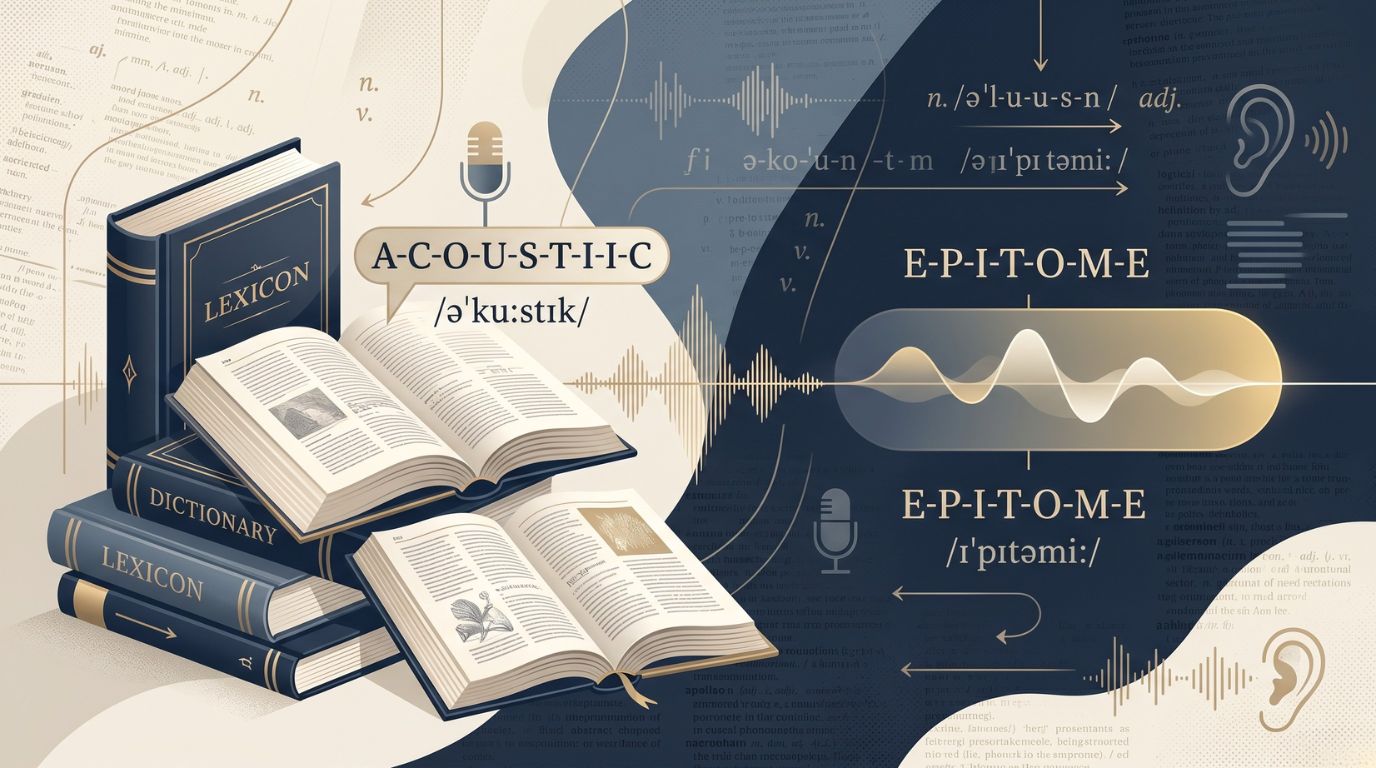
Almost everyone mispronounces certain English words from time to time. That does not mean their English is weak. It usually means they are dealing with one of the oldest problems in the language: English spelling often gives poor clues about actual pronunciation. Because English developed from multiple language sources over many centuries, many words look far more predictable on the page than they sound out loud. That gap between spelling and pronunciation is one of the main reasons some words are so often said incorrectly.
For learners, professionals, actors, speakers, and writers, the real goal is not perfection for its own sake. It is clarity, credibility, and confidence. A useful first step is to decide which pronunciation model you want to follow. If your aim is a neutral U.S. standard, practicing with the General American accent generator can help anchor your ear. If your context is more UK-facing, the British accent generator offers a useful comparison point, while region-specific tools like the Southern accent generator and the New York accent generator help you distinguish true mispronunciations from legitimate regional variation.
Why So Many English Words Are Commonly Mispronounced
The most important thing to understand is that English is not phonetically tidy. Many words come from French, Latin, Greek, Norse, and older forms of English, and those histories remain visible in spelling long after pronunciation has shifted. Merriam-Webster points out that English is both a “mongrel” language and a very old one, which means its spelling system preserves many older patterns that no longer match modern speech. When the spelling does not transparently reflect the sound, mispronunciation becomes almost inevitable.
Commonly Mispronounced Words You Should Know
Some words are mispronounced because they contain silent letters. Others mislead speakers because they look like they should follow a familiar sound pattern but do not. Merriam-Webster highlights a long list of examples that regularly cause trouble even for native speakers. A strong starting set includes colonel pronounced “KER-nul,” epitome pronounced “ih-PIT-uh-mee,” awry pronounced “uh-RYE,” cupboard pronounced “KUB-erd,” boatswain pronounced “BOH-sun,” solder pronounced “SAH-der,” victuals pronounced “VIT-ulz,” and etcetera pronounced “et-SET-uh-ruh.” These are excellent study words because they reveal how easily spelling can lead even confident readers in the wrong direction.
One especially useful pair is primer, because it has two legitimate pronunciations depending on meaning. When it refers to an introductory book, it is pronounced “PRIMM-er.” When it refers to a preparatory paint coat, it is pronounced “PRY-mer.” This is a helpful reminder that pronunciation problems are not always about carelessness; sometimes English simply assigns different sounds to the same spelling in different contexts.
Mispronunciation vs. Accent Difference
Not every pronunciation difference is a mistake. This is one of the most important distinctions in pronunciation coaching. A true mispronunciation happens when a word is said in a way that falls outside accepted usage for the intended word. By contrast, many differences in sound are simply accent differences. A British speaker, a General American speaker, and a New Yorker may all pronounce the same word differently while still being completely correct within their speech community.
That is why it helps to compare pronunciation against a target model rather than against a vague idea of “correct English.” If you work in international business, broadcast, teaching, or voice performance, comparing your phrasing with the General American accent reference or the British accent reference can help you decide which pronunciation standard is most appropriate for your audience. If your work leans toward regional authenticity or character voice, the Southern accent tool or the New York accent tool can help you hear how accepted local pronunciation differs from a broad mainstream model.
Practical rule: before correcting a pronunciation, ask whether it is actually wrong or simply different within another recognized accent system.
Why These Words Matter in Professional Settings
Commonly mispronounced words matter because they tend to show up in exactly the places where speakers want to sound composed: presentations, meetings, interviews, classrooms, podcasts, and formal conversation. A word like epitome or etcetera can instantly distract a listener if it is said incorrectly, not because one mistake ruins credibility, but because unexpected pronunciation pulls attention away from the message.
That makes these words worth targeted practice. Rather than trying to correct every pronunciation detail in your speech at once, it is often more effective to identify a short list of high-frequency professional words and master those first. When you pair that work with an accent model from the Accent Help accent directory, your practice becomes more focused and easier to apply in real speech.
How to Fix Words You Commonly Mispronounce
The most reliable correction method is not memorizing isolated dictionary entries. It is building a repeatable cycle of noticing, checking, practicing, and reusing. Start by writing down the words you are least certain about. Then verify their pronunciation with a trusted reference. Next, say each word in a short sentence, not by itself. Finally, reuse those same words in natural speech until they stop feeling unusual.
This process works because pronunciation lives inside rhythm, not just inside individual sounds. If you only rehearse a word on its own, you may still stumble when it appears in spontaneous conversation. If you practice it in phrases and compare the results against a target style such as the neutral U.S. phrasing model or the UK-style phrasing model, the improvement becomes much more durable.
A simple pronunciation repair workflow:
- Notice which words you hesitate over or hear corrected most often.
- Check the accepted pronunciation in a trusted dictionary or pronunciation guide.
- Practice the word in at least three full sentences.
- Repeat it aloud on different days rather than only once.
- Compare your phrasing against the accent model most relevant to your audience.
How Accent Tools Can Help
Accent tools are especially helpful when your challenge is not just knowing the right pronunciation, but placing it inside natural speech. A word can sound fine in isolation and still feel awkward in a sentence if your timing, stress, or phrasing does not match your target model. That is why pronunciation learners often benefit from comparing the same line across multiple accent references.
For example, if you are trying to build a broadly neutral pronunciation style, the General American accent generator can help you hear smoother everyday phrasing. If you want a UK-oriented comparison, the British accent generator can highlight where rhythm and lexical choices shift. If you are studying regional energy or character voice, the New York speech model and the Southern speech model can help you separate local style from actual error. For broader exploration, the full Accent Help accent collection makes it easy to compare how different English varieties shape the same line.
A Short List Worth Mastering First
If you want a practical starter list, focus first on words that are both common and high-visibility. Good examples include colonel, epitome, awry, etcetera, cupboard, boatswain, solder, and victuals. These words appear often enough in educated speech and writing to matter, yet they remain easy to misread if you rely only on spelling.
You do not need to learn hundreds of tricky words in one week. In fact, trying to do that usually leads to shallow recall. Choose five to ten words, practice them in context, and add more only once those feel stable. Pronunciation progress is cumulative, and focused repetition is much more effective than random exposure.
Final Thoughts
Words that are commonly mispronounced are not signs of poor intelligence or weak language ability. They are a reflection of how irregular English spelling can be. Once you understand that, the task becomes much more manageable. You are not trying to become flawless overnight. You are learning which words deserve special attention and how to place them inside clear, natural speech.
If you want to take the next step, combine dictionary-based correction with accent-based listening. Working with the General American reference, the British pronunciation model, and the wider Accent Help accent library gives you a much clearer sense of what needs correction, what counts as acceptable variation, and how to sound more confident in the situations that matter most.