Steel Magnolias Accents: What Southern Sound Does the Story Really Need?
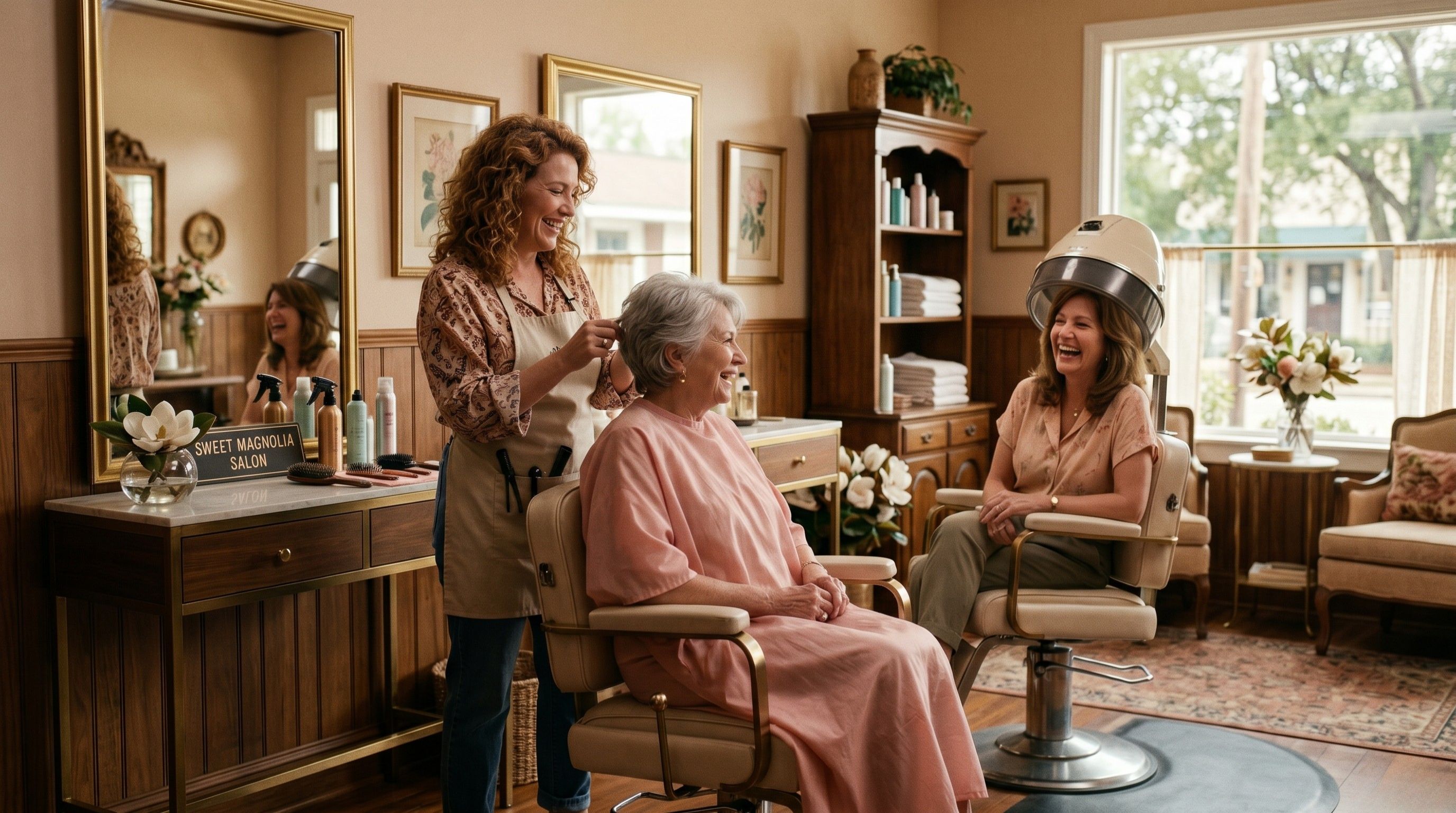
When actors prepare for Steel Magnolias, one question almost always comes up early in rehearsal: what kind of Southern accent should the characters actually have? While many productions default to a broad Hollywood “Southern belle” voice, the world of the play is far more specific than that.
Steel Magnolias is rooted in Louisiana culture, particularly the speech patterns and social rhythms of northwestern Louisiana. That distinction matters because Louisiana accents vary widely depending on region, background, and community. A New Orleans sound, for example, feels completely different from the softer, grounded speech associated with towns like Natchitoches.
The Real Louisiana Influence Behind Steel Magnolias
The play was written by Robert Harling, who grew up in Natchitoches, Louisiana. Although the story takes place in the fictional town of Chinquapin, the characters, dialogue, and emotional atmosphere were heavily inspired by Harling’s hometown and the women he knew there.
Because of that, the dialect should feel authentic to small-town northwestern Louisiana rather than sounding like a generic “movie South.” The beauty salon setting especially reinforces that idea. These characters have known one another for years, so their voices should feel natural, relaxed, and lived-in rather than exaggerated for effect.
Why Many Productions Miss the Mark
One of the most common mistakes in Steel Magnolias is treating every Southern accent as interchangeable. Actors often lean into a slow, breathy drawl with heavily dropped R sounds because that style is instantly recognizable to audiences. However, that approach can push the performance into stereotype instead of realism.
In reality, Louisiana speech patterns are much more nuanced. Northwestern Louisiana accents tend to sound warmer and more grounded than the polished plantation-style accents commonly associated with Hollywood portrayals of the South.
For stage productions, this matters even more because the play depends heavily on personality and character dynamics. If every character sounds the same, much of the social texture disappears.
The Hollywood Influence on the Film Version
The 1989 film adaptation introduced many viewers to Steel Magnolias, but its accents are not always regionally precise. Julia Roberts, for example, uses a more stylized Southern accent for Shelby that reflects a familiar cinematic version of Southern femininity rather than the exact sound associated with Natchitoches.
That does not make the performance ineffective, but it does mean actors should avoid copying the movie too closely if authenticity is the goal. A believable regional voice usually sounds subtler and less performative than the accents audiences hear in classic Hollywood dramas.
Choosing the Right Accent Approach
For most casts, the best starting point is developing a balanced Southern rhythm instead of jumping directly into an exaggerated Louisiana caricature. Working with a realistic speech pattern first helps actors maintain emotional honesty while still sounding regionally believable.
Tools like the Southern Accent Generator can help actors practice vowel placement, pacing, and conversational flow without overdoing the accent. It creates a more grounded foundation that suits the tone of the play.
It is also helpful to compare that sound against a traditional New Orleans accent so performers can clearly hear the difference. Many actors automatically associate Louisiana with New Orleans speech patterns, but Steel Magnolias belongs to an entirely different part of the state.
For broader dialect exploration, actors and coaches can also review the full library of regional accent resources to compare neighboring Southern dialects and speech variations.
Why Truvy’s Voice Often Feels the Most Authentic
Interestingly, many viewers feel that Truvy’s speech patterns come closer to the emotional reality of the play than some of the more polished accents in the film. Her voice carries warmth, familiarity, and a working-class Southern energy that feels socially believable.
That authenticity matters because Steel Magnolias is ultimately about relationships, community, humor, and grief. The strongest performances usually come from actors who focus on sounding emotionally truthful instead of trying to sound “as Southern as possible.”
Accent Tips for Stage Actors
When preparing the play for the stage, actors should focus on consistency and character individuality rather than imitation. Shelby should not sound exactly like Ouiser, and Clairee should not sound identical to Truvy. Even within the same town, personality, class, and life experience shape how people speak.
The most effective accents in Steel Magnolias usually share three qualities:
- Natural conversational rhythm
- Subtle regional consistency
- Clear character distinction
Audience immersion improves dramatically when the accents feel effortless rather than overly “performed.”
Building a More Authentic Southern Sound
If your production team wants a practical approach, begin with a realistic Southern base accent and refine it gradually toward northwestern Louisiana speech patterns. Avoid pushing the drawl too hard or relying heavily on stereotypical dropped-R pronunciation.
Using a grounded Southern dialect reference alongside comparison tools like the New Orleans accent guide can help actors hear regional differences much more clearly.
Final Thoughts
The accents in Steel Magnolias work best when they feel connected to real people and a real community. The story is deeply tied to Natchitoches and the culture of northwestern Louisiana, not a broad Hollywood fantasy of the American South.
Actors who approach the dialect with subtlety, warmth, and social realism usually create performances that feel far more authentic than exaggerated “Southern belle” impressions. In a play built on emotional honesty, that authenticity makes all the difference.