Can You Change Your Accent as an Adult? The Facts
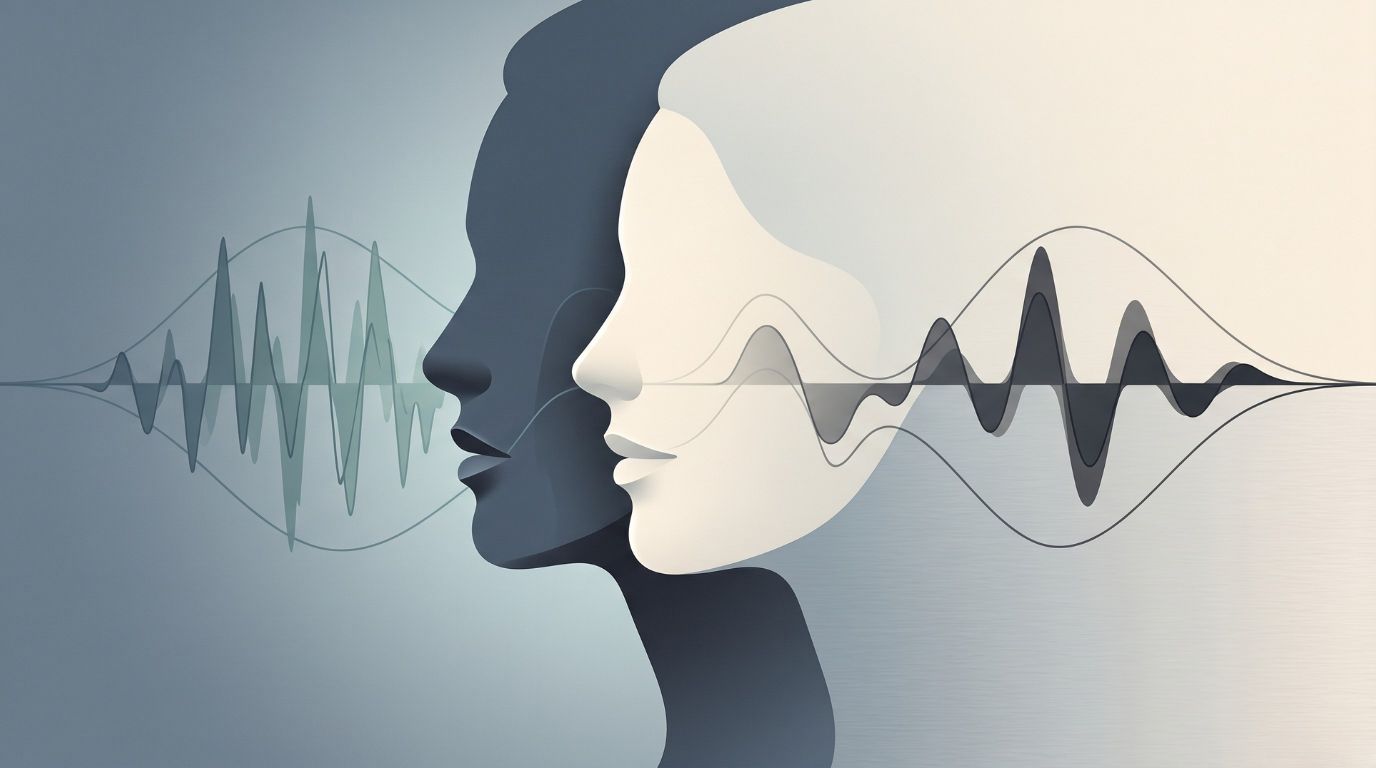
Yes, your accent can change as an adult. The more useful question is not whether adult accent change is possible, but how much change is realistic, what causes it, and why it happens quickly for some people while hardly happening at all for others. Adult accents are not frozen. They can shift gradually through relocation, work, relationships, social identity, and repeated exposure, and they can also be changed more deliberately through focused listening and speech practice, as both the University of Reading’s explanation of why some people lose their accents and the McGill discussion of medium-term accent dynamics make clear.
If you have ever noticed that your voice sounds slightly different after years in a new city, or if you have intentionally tried to sound more neutral, more regional, or more stage-ready, you are already inside this phenomenon. Accent change in adulthood is real, but it is variable, uneven, and deeply tied to identity. That is why a practical starting point is often to identify where your speech currently sits before trying to change it, which is exactly the role of the Accent Help accent check tool and the related Accent Help article on understanding your own accent.
Why adult accents can change at all
Accent is not only a record of where you grew up. It is also a record of who you spend time with, how much you want to belong, how often you adjust your speech for clarity, and how your social environment changes over time. According to the University of Reading’s discussion of accent, identity, and belonging, people often shift their speech toward the group they identify with, sometimes consciously and sometimes without realizing it. That means accent change is not just a mechanical issue of sound imitation. It is also a social response.
For example, someone who moves from Australia to the United States may begin to soften certain vowel features for clarity, while someone from a strong regional background may hold onto those same features because they feel central to identity. Both outcomes are normal. Accent is flexible, but not everybody uses that flexibility in the same way.
What research says about adult accent change
Research supports two important ideas at once: first, adults absolutely can change their accents; second, the amount and speed of that change differ sharply from person to person. The McGill account of a study on accent change over weeks and months describes accent change in adults as well documented both in the short term and long term, while also showing that some people are clear “changers” and others are clear “non-changers.” In other words, the capacity is real, but susceptibility varies.
That same McGill research also complicates a common myth: intense contact alone does not guarantee that everyone in a group will end up sounding alike. People interact constantly, yet their accents may still move in different directions or at different speeds. That matters for learners because it means no single practice routine or relocation story predicts identical outcomes for every adult speaker.
Bottom line: adult accent change is common enough to be real, inconsistent enough to be personal, and complex enough that social contact, identity, habit, and training all matter.
Natural accent drift versus deliberate accent training
Not all adult accent change happens for the same reason. Some change is natural drift. This is the kind that happens after years in a new place, in a new profession, or in a new social circle. You may not notice it happening until someone from home points out that you “sound different.” Other change is deliberate. That includes accent modification for professional communication, dialect work for acting, pronunciation training for language learners, or targeted effort to sound more like a specific region or standard variety.
If your goal is deliberate change, it helps to think less about “fixing” an accent and more about building a new speech pattern that can coexist with your original one. That is the approach behind the Accent Help guide to reducing or modifying a Southern American accent, which frames accent work as added flexibility rather than self-erasure. Adults often do best when they aim for control and range, not for the impossible idea of speaking with “no accent.”
What makes an adult accent more likely to change
Several conditions make accent change more likely in adulthood. Long-term exposure to a new speech community is one. Strong motivation to fit in or be understood is another. Professional demands, romantic relationships, new peer groups, and repeated imitation of a target model can all increase the chance that certain features will shift. The University of Reading’s account of accent adaptation emphasizes exactly this link between social identification and speech change.
Deliberate technique also matters. Adults rarely change by vague exposure alone if their goal is precise control. They change faster when they listen actively, compare models, record themselves, and train rhythm and placement systematically. This is why the Accent Help article on the shadowing technique is so relevant to adult accent change: shadowing trains the ear, timing, intonation, and connected speech in motion, which is exactly how real accents live in the mouth rather than on paper.
What makes an adult accent less likely to change
Accent may resist change when a speaker has a strong attachment to local identity, limited contact with new models, little feedback on intelligibility, or no clear reason to adjust. Some people also simply appear less susceptible to change over time, even under similar conditions. The McGill explanation of why some adults are changers and others are not is especially useful here because it shows that variation between speakers is not a failure of effort. It is part of the phenomenon itself.
That is also why unrealistic promises about “sounding native in two weeks” are so misleading. Adults can absolutely improve, adapt, and transform many parts of their speech. But accent change is usually gradual, partial, and layered, especially if the original accent remains emotionally important to the speaker.
How to tell whether your accent is already changing
Many adults do not notice their own accent shift because change tends to happen through small adjustments rather than dramatic overnight transformation. You may start shortening certain vowels, changing your rhythm in professional settings, picking up local phrasing, or sounding more like one community in one context and more like another community elsewhere. That is one reason the Accent Help article on identifying your current accent is useful even for advanced speakers: it treats accent as a moving profile rather than a fixed label.
For a more practical self-check, the Accent Help accent-check tool lets you upload or record short samples and compare them with six major accent profiles. Used once, it can help you identify where your speech sits now. Used repeatedly over time, it can help you notice whether your speech is drifting, stabilizing, or moving toward a target you have been practicing.
How adults can guide accent change deliberately
If you want your accent to change on purpose rather than by accident, a structured plan matters. The first step is to choose a target clearly. “I want to sound better” is too vague. “I want a more neutral General American presentation style,” “I want a lighter version of my current regional accent,” or “I want to sustain a role-specific British cadence” are all more workable. The Accent Help accent directory is helpful here because it lets you compare multiple regional models rather than chasing a vague idea of “correct speech.”
The second step is to stop focusing only on isolated vowels. Accent lives in whole-body speech habits: oral posture, resonance, default tongue position, pacing, and melody. That is why the Accent Help article on accent placement is one of the most practical internal resources for adults. It explains why an accent becomes more repeatable when you find the physical “home” of the speech pattern instead of trying to memorize every sound one by one.
Useful adult accent-change habits
- Record your speech regularly and compare it against a stable model.
- Shadow short clips every day instead of practicing once a week in long bursts.
- Choose one target accent before borrowing features from several different ones.
- Work on rhythm and phrase shape, not just individual consonants.
- Use contrastive tools and articles from the Accent Help blog to keep technique grounded in real speech habits.
Does changing your accent mean losing your identity?
Not necessarily. For many adults, accent change is not replacement but expansion. People often learn to shift depending on context, using one speech style at home, another at work, and another in performance or media settings. The University of Reading perspective on accent and belonging is especially helpful here because it reminds us that speech is tied to identity, but identity itself is not single-layered. Adults belong to multiple communities, and their speech can reflect that.
In practice, this means the healthiest goal is often flexibility. You may want to sound clearer in presentations, more locally aligned in one city, or more historically accurate in performance, while still sounding fully yourself with family and old friends. Accent work becomes far less stressful when it is treated as a choice-rich skill rather than a test of authenticity.
When a sudden accent change is something different
Most adult accent change is gradual. If someone’s speech changes suddenly and dramatically, that is a different situation entirely. The University of Reading article on why accents change also notes rare cases such as foreign accent syndrome following stroke or brain injury. That kind of change is medical, not the normal social or training-based accent drift discussed in this article. If a sudden accent shift follows illness, surgery, or neurological symptoms, it should not be treated as ordinary accent adaptation.
Final thoughts
So, can your accent change as an adult? Yes. Research says it can. Experience says it often does. But the real answer is more nuanced: adult accent change depends on exposure, identity, motivation, technique, and the simple fact that some people are more susceptible to change than others. It may happen naturally, deliberately, partially, or contextually, and it rarely follows a neat, linear path.
If you want to understand whether your own accent is shifting, begin with the Accent Help accent-check tool, then deepen that self-awareness with the guide to identifying your current accent. If you want to guide change on purpose, build from the placement article, the shadowing practice guide, and the wider Accent Help accent library. Adult accent change is possible. The most productive next step is not wondering whether it can happen, but deciding what kind of change you actually want and then practicing in a way that gives it a fair chance to happen.